
In a fictional sample, an athlete notes rushed preparation before three difficult days.
TRANSFEREQ | PERFORMANCE INTELLIGENCE FOR BASEBALL
The box score
is a moment.
See the work nobody sees.
Working examples use fictional athletes and synthetic records only.ACTUAL PLAYER INTERFACESYNTHETIC DATA
SEE THE SYSTEM
This is what the work looks like.
TransferEQ connects preparation, attention, recovery, daily behaviour and development evidence that often sit in separate places. It is not a replacement for coaching judgement. It makes the starting point for a better conversation easier to see.
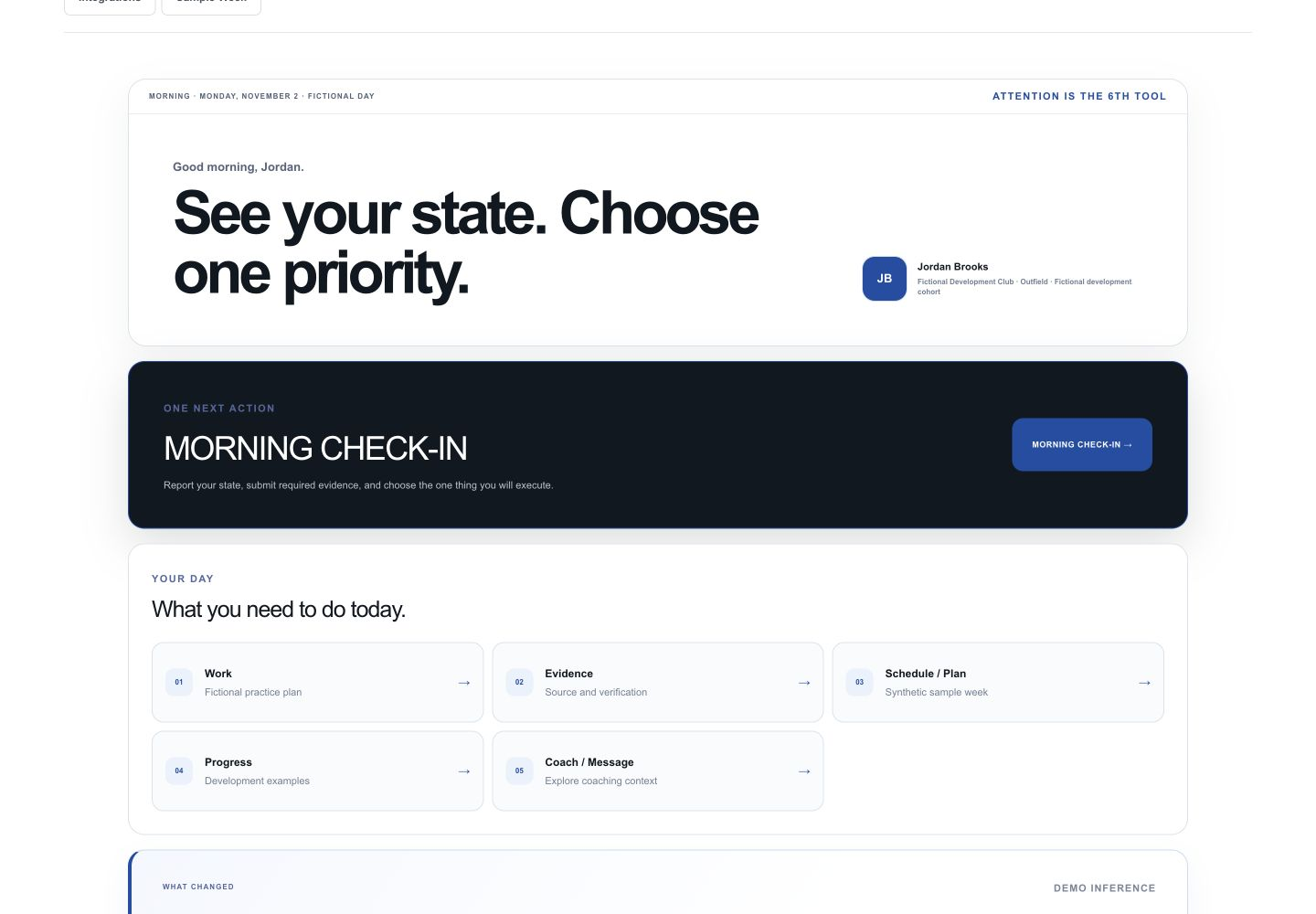
What an athlete sees and records.
Explore Player View →The actual player home renderer, populated with fictional information. Wearable values remain unknown when no provider is connected.
THE MISSING PICTURE
The numbers are real.
They are not the whole picture.
Velocity, exit velocity and game results matter. So does what the athlete can access and execute when preparation, recovery, attention or the environment changes.
TransferEQ brings those variables into the conversation without claiming they explain an outcome on their own.
PerformanceWhat is accessible in this moment
PreparationAttentionRecoveryBehaviourDevelopmentEnvironment
Connected context supports a better question. It does not establish causation.
FICTIONAL EXAMPLE
A pattern can change the first question.
Instead of assuming effort or motivation, the coach can ask what changed in the routine.
Agree on one earlier-arrival cue for the next week and review what the athlete notices.
This is a fictional illustration, not a diagnosis or a claim that one behaviour caused a performance result.
Explore the working example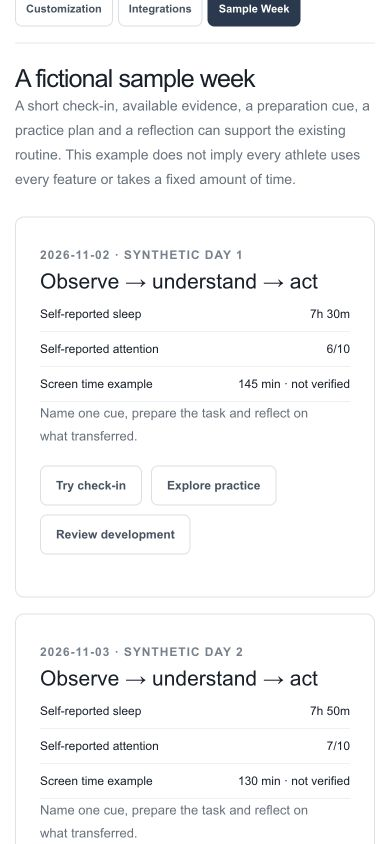
BUILT AROUND THE WORK
Useful structure. No feature parade.
TransferEQ can be configured around the people and routines already doing the work. Each example below leads to the working public demonstration and states the capability boundary.
Coaches
Role-based views help coaches review available information and decide where a conversation may be useful.
Explore the working exampleWHOOP
Available recovery and sleep data can join an authorized athlete account. The public example is not connected and keeps wearable values unknown.
Explore the working examplePractice plans
The working editor connects objectives, groups, assignments and reflection. Public edits stay in the open tab.
Explore the working exampleParent view
Approved family access can show schedule context and summaries without exposing private reflections or coach notes.
Explore the working exampleDevelopment
Dated observations, goals and next actions can sit together. A pattern is a question to test, not proof of cause.
Explore the working exampleAPIs and imports
WHOOP and Google Calendar have authorization and sync workflows. Approved CSV/XML imports are reviewed. Other provider connections require verification.
Explore the working exampleROLES AND ROUTINE
Different roles. A low-burden routine.
For athletes, the work centres on brief check-ins. For coaches, it is a review of relevant information and a better conversation. The system should support the routine, not become another burden.
Athletes
Short check-ins make preparation, attention and recovery easier to notice.
View exampleCoaches
Review available patterns without reducing the athlete to a score.
View exampleFamilies
See only the approved context that supports the athlete’s routine.
View examplePrograms
Keep development and recruiting information organized without forcing one coaching style.
View exampleRECRUITEQ
Talent needs context.
RecruitEQ keeps verified information, self-reported information, development evidence, program needs and unknowns in their own lanes.
It does not turn a profile, a score or a label into the whole story. It shows what is known, what still needs verification and what the next useful action may be.
Explore RecruitEQ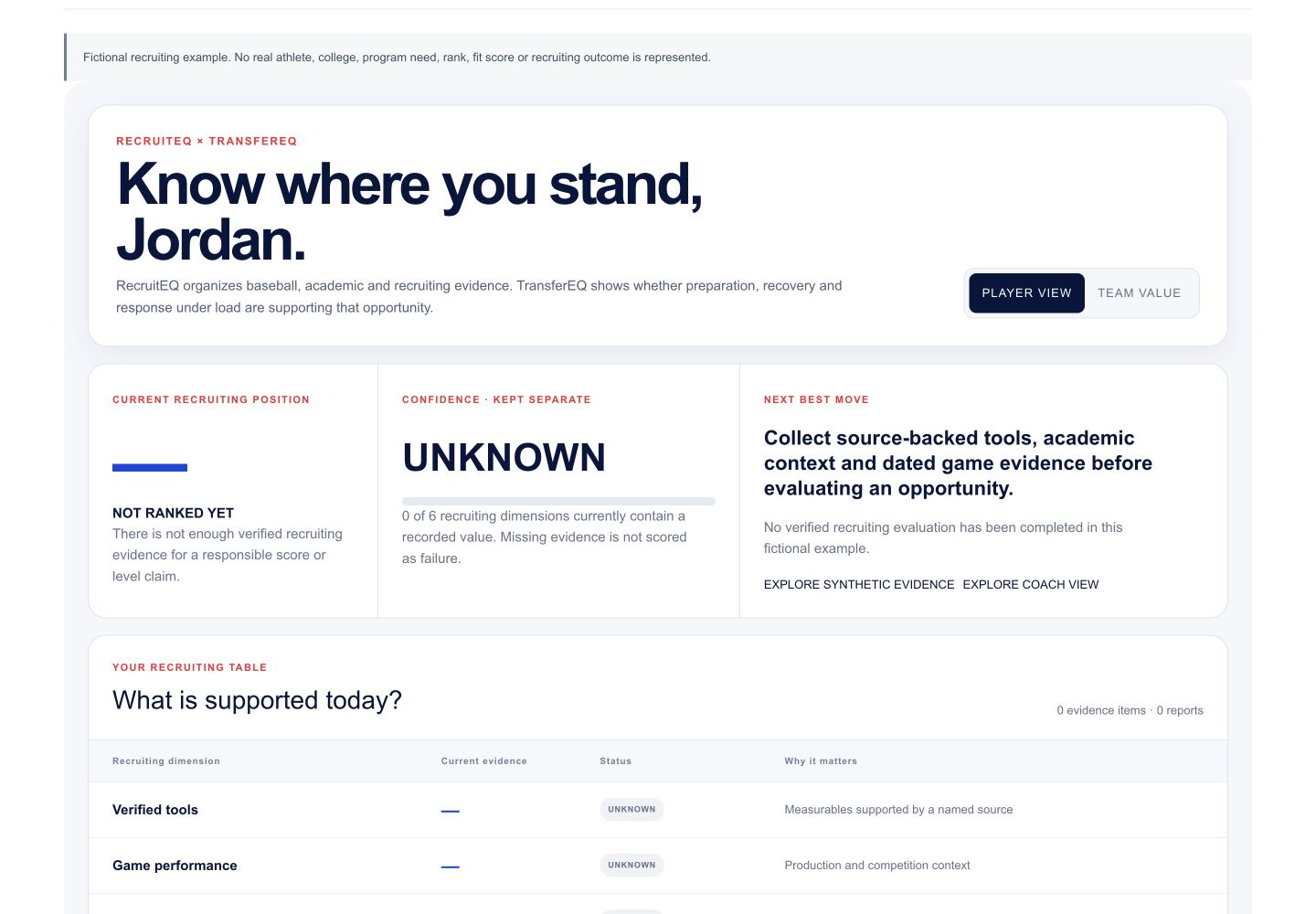
OBSERVE → UNDERSTAND → ACT
Information matters when it changes the next conversation.
Observe
Notice what is actually happening across the routine.
Understand
Separate FACT, PATTERN, INFERENCE and UNKNOWN before drawing a conclusion.
Act
Choose one practical next step, then keep observing.
EQ-OS AND THE JOURNAL
The thinking behind the system.
EQ-OS is the thinking and behaviour framework behind TransferEQ. It focuses on how attention, preparation, recovery and daily choices may affect an athlete’s ability to bring their work into competition.
The Journal examines the questions underneath the system: what a person knows, what they can access, and what transfers when conditions get harder.
Read the JournalEssays
You Don't Need Their Permission.
An open letter to young baseball players, parents, and anyone who thinks they own a kid's future.
Read article EssaysWhat We Carry
Some thoughts on baseball, family, love, shame, and the complicated business of being human.
Read article EssaysOctober: The Work Nobody Sees
On the last domino, the illusion of progress, leadership without the performance, baseball, recovery, fatherhood, and learning when to stop trying so hard.
Read articleSEE THE WORK NOBODY SEES
See what the numbers leave out.
Explore the actual interface before deciding whether TransferEQ fits your athletes or program.